
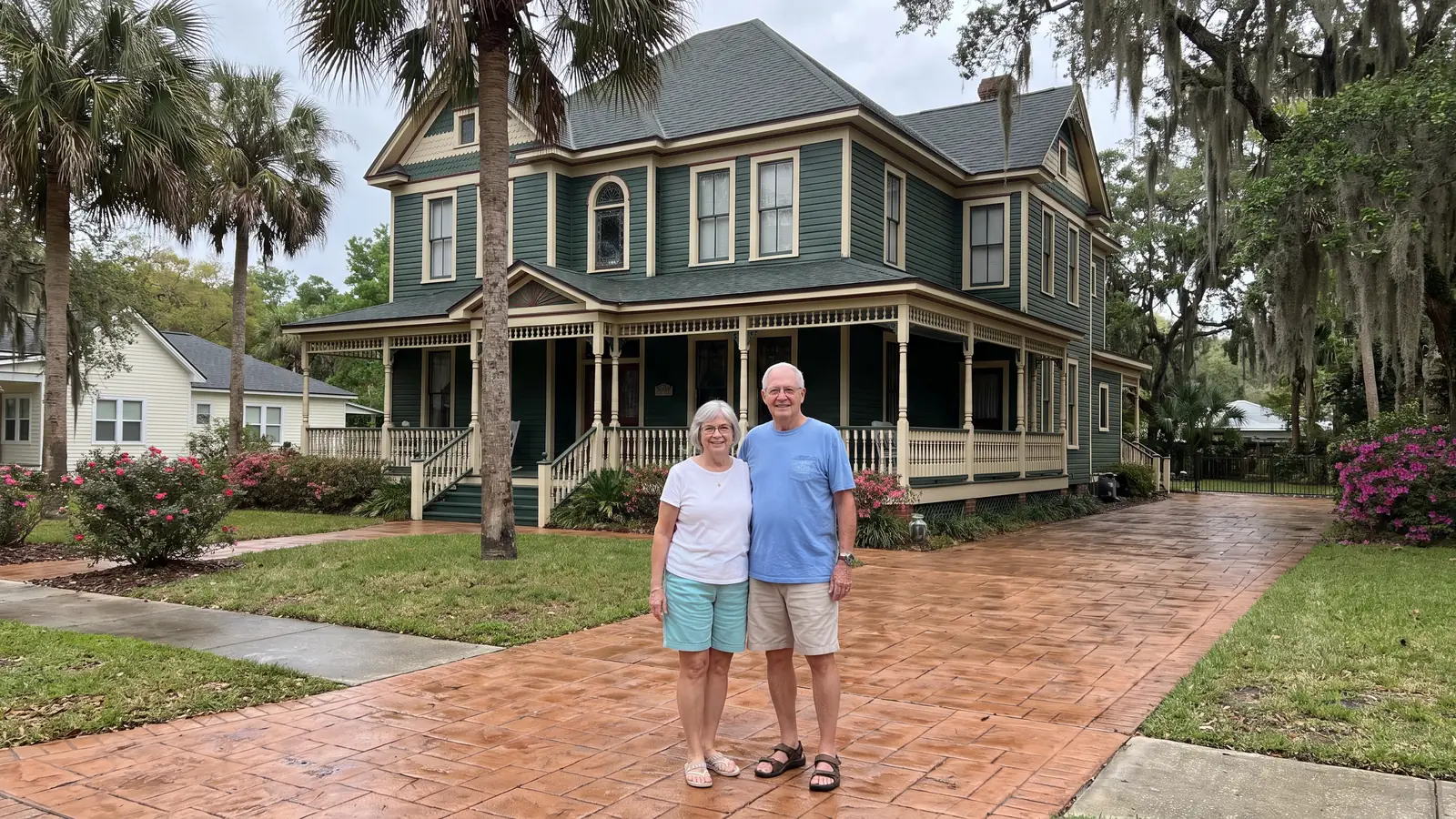
Deeper color and joints that stay put
Paver Sealing in Palatka, FL
Call (386) 854-4508 for a free paver sealing estimate at your Palatka home.
- Brings out deeper paver color
- Fresh joint sand helps lock pavers in place
- Gives weeds less room to grow
- Makes the surface easier to keep clean
- Free estimate, no obligation
Request a Free Estimate
Free, no obligation.
Who can seal pavers at my Palatka home?
A local contractor can seal pavers anywhere in Palatka, FL, and you will hear back within 1 business day, usually much sooner. The estimate is free, and booking is up to you. To begin, call (386) 854-4508.
A coat of sealer darkens faded color, holds sand in the joints and lets dirt and algae rinse off more easily. Picture the driveway you pull onto each evening, gray at the edges and thin on sand at the seams, turned dark and even again with every joint full. Driveways carry tires and oil, while pool decks carry splash and bare feet, so each area gets its own plan. Mention what each area is used for when you send a quick request.
Paver Sealing Palatka Is Proud to Serve Northeast Florida
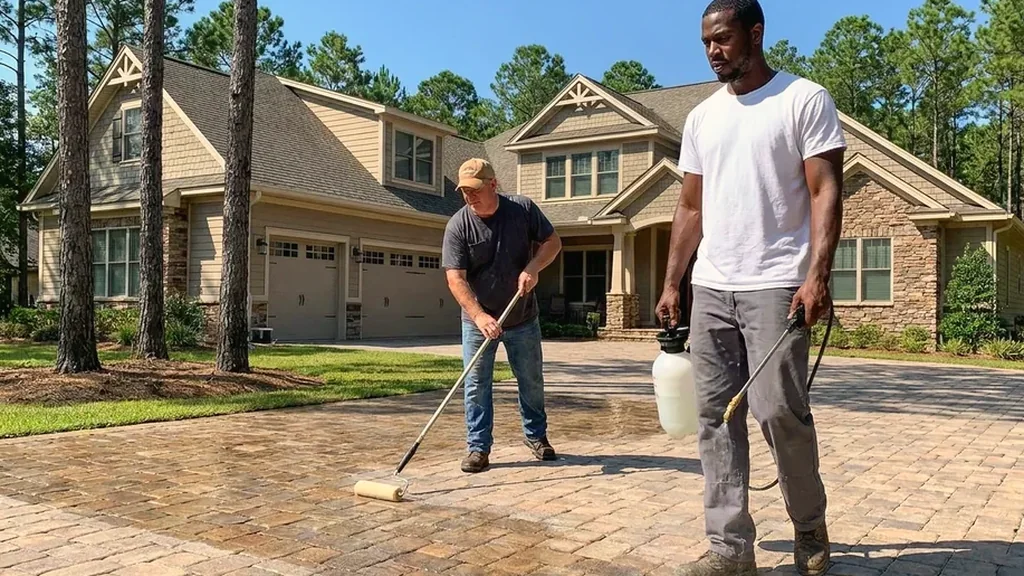
What is included when pavers are sealed in Palatka?
Plan on four parts: an inspection, a wash, fresh joint sand and the sealer coat. The wash and the drying wait usually take the most time. To walk through them for your property, call (386) 854-4508.
Inspection
Square footage, sunken spots, cracked pavers, old sealer and standing water all get noted before a price is set.
Wash
Algae, dirt, rust and leaf stains come off with a surface cleaner and a cleaner made for each stain.
Joint sand
Sand fills every gap so the pavers lock together and weeds have less room to take hold.
Sealer coat
The sealer goes on dry pavers in one even pass at the coverage rate on the product label.
How can I tell my pavers need sealing?
Look for color that has gone chalky, joints sitting below the paver edges, sand spread across the driveway after a storm and water that soaks in instead of beading up. Unilock says a whitish film or patchy gloss points to trapped moisture or too much sealer, so a coat that looks cloudy is a sign to ask questions. Refilling sand early is cheaper than relaying pavers that have moved. For a quick opinion, call (386) 854-4508.
Which paver sealer works in Palatka's heat and humidity?
Different homes call for different products, so ask what the contractor plans to put down and the reason for it. Unilock describes water-based sealers as easier to clean up and able to harden joint sand, and solvent-based sealers as slightly more durable but only for perfectly dry pavers and joints. To compare options for your pavers, call (386) 854-4508.
Humid days matter either way. Sealer put on damp pavers can turn milky, so the surface has to be dry all the way through, and a few hours in warm sun or about a day in cool shade is Unilock's guide. Ask how the schedule changes when rain moves in. Bring it up when you send a quick request.
Wet look or matte finish: which suits my pavers?
Choose a wet look for deep, rich color with some shine, or a matte finish to stay close to how the pavers looked new. Unilock says a high gloss can be slippery when wet and that a penetrating matte sealer keeps more traction. That makes matte a sensible question for a pool deck or a shaded walk. To see samples of both, send a quick request.
How often should pavers be resealed in Palatka?
Plan on every two to five years. A Northeast Florida washing company calls two to three years typical and says full sun, pool chlorine and summer storms can shorten that to about two. Unilock says many owners wait three to five. Your own schedule depends on sun, traffic and how the last coat was put down. To have your coat checked, call (386) 854-4508.
Will extra coats of sealer protect pavers longer?
No. Family Handyman says sealing more often than every three to five years can leave a film that discolors the surface, and Unilock advises sealing in one pass to avoid uneven gloss. One thin, even pass at the label rate is enough. When a bid pitches three or four coats as added protection, ask why before you send a quick request.
When is a good time of year to seal pavers in Palatka?
The forecast matters more than the calendar, but a drier season helps. A Northeast Florida washing company names October and November as the season for sealing because the air is drier then. New pavers should also wait 60 to 90 days, since Unilock says efflorescence usually takes two to three months and can last a year. For pavers installed lately, mention the date when you call (386) 854-4508.
Unilock wants clear skies for 24 to 48 hours ahead of the job and dry weather for up to 48 hours afterward, at 50 to 90 degrees. About 75 is the sweet spot, because pavers that are too hot can stain or peel early. The sprinklers stay off while the coat cures. To find a date the forecast allows, send a quick request.
Can sealing fix pavers that have sunk or spread apart?
No. Unilock says sealing is not a cure for poor drainage or base problems. Pavers that wobble under a tire or leave a puddle after rain need base repair first, and joint sand only stays once the surface is level. Ask whether leveling is part of the price or billed on its own when you send a quick request.
Which areas around a Palatka home can be sealed?
Sealer suits a driveway, a pool deck, a back patio or a front walk. Each wears differently, so the plan should change from one to the next. To start with the area you notice most, send a quick request.
Driveways
Tires, oil drips and long hours of direct sun all land on a driveway. Sealing it keeps the color even and the joints full where cars turn and brake.
Pool decks and lanais
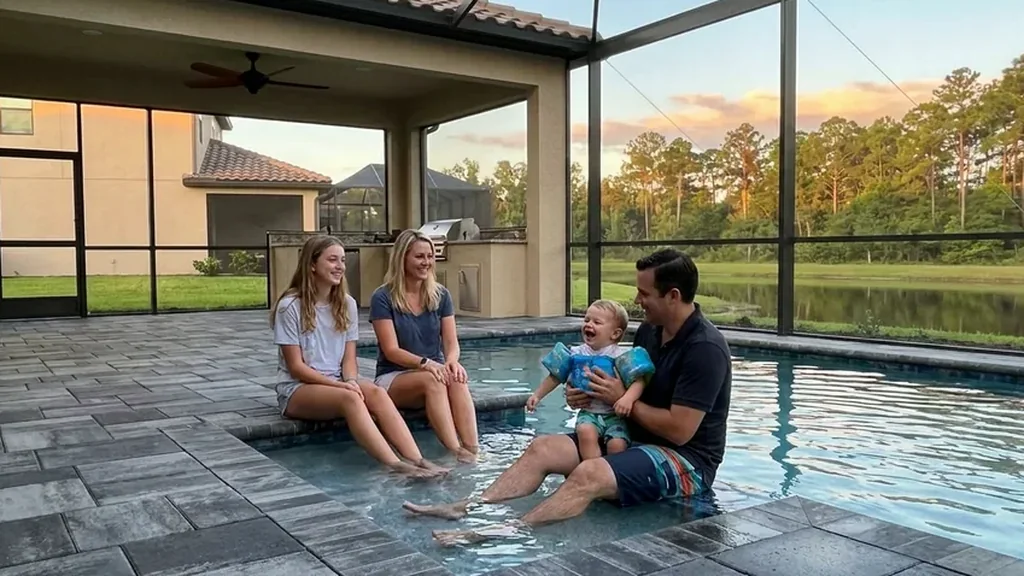
Pool pavers face splashing, chlorine and bare feet daily. Sealing around a pool should leave a surface that still gives good footing.
Back patios
Patios under trees collect leaves, and wet leaves leave tannin stains. Sealing a patio like that means getting the dark spots out before they set.
Front walks and entries
Walkways sit close to flower beds, mulch and sprinkler heads. Sealing the walk to your door is a small job that every visitor notices.
What causes paver trouble in Palatka?
Five problems come up again and again: fading in open sun, sand washed out by storms, orange irrigation stains, damp green growth and leaf stains. Each one costs less to handle early. To learn which of them apply to your pavers, call (386) 854-4508.
1. Fading in open sun
Palatka's average daily high is about 82 degrees, and a driveway with no shade takes that heat from morning to dusk. Unsealed color turns chalky first in those spots.
2. Sand washed out by storms
A Northeast Florida washing company says summer storms pull sand out of pool decks and driveways. When joints run low, pavers begin to move and weeds take root.
3. Orange marks from irrigation
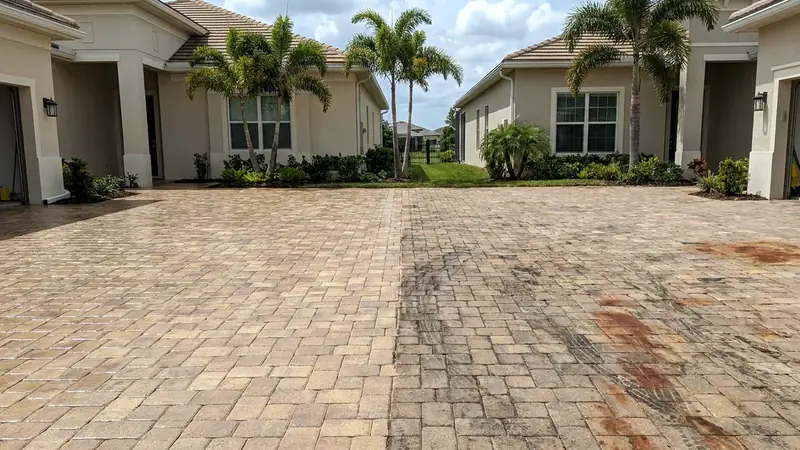
UF/IFAS says most Florida well water is high in iron, and the water leaves rust deposits on anything it touches. These marks need a rust treatment before any coat goes down.
4. Green and black growth in damp spots
Pavers beside a lawn sprinkler zone or under a tree stay wet for more of the day. In a humid subtropical climate that is all algae needs to spread.
5. Leaf stains under trees
Western Interlock, a paver maker, links leaf stains to tannins in the leaves. A sealer coat helps keep the next season's stain from setting in, according to the washing company.
What does paver sealing cost in Palatka?
Expect about $1.75 to $3.25 per square foot to clean, sand and seal together, the range a Northeast Florida washing company publishes. Size moves the rate, and the same company says strip and reseal pricing runs higher when an old coat has failed. Brick or stone pavers can also add to the cost, and joint sand repair can be quoted separately. For a number written for your home, send a quick request.
If a bid comes in far below that range, ask which steps it leaves out, since skipped prep is how coats fail. To check a quote you already have against these figures, call (386) 854-4508.
Looking for a wash only? Read the paver cleaning and joint sand guide, check where contractors work or return to the Palatka paver sealing overview.
| Paved area | Typical example | Clean, sand and seal |
|---|---|---|
| 300 sq ft | Small patio or walkway | $525 to $975 |
| 600 sq ft | Two car driveway | $1,050 to $1,950 |
| 1,000 sq ft | Large driveway or pool deck | $1,750 to $3,250 |
| 1,500 sq ft | Driveway plus pool deck | $2,625 to $4,875 |
Math based on the $1.75 to $3.25 per square foot that Northeast Florida paver companies publish. Your contractor sets the actual price after seeing the surface. Repairs, leveling and stripping failed sealer are usually extra.
Why hire a contractor who works around Palatka?
A contractor who works in Putnam County already plans for river humidity, afternoon storms and iron in irrigation water. The price still arrives in writing, and nothing is decided for you. To begin, call (386) 854-4508.
A contractor who works around here
A company that covers Putnam County has seen how river humidity and summer storms treat pavers. Your first visit then deals with local conditions instead of general advice.
A price with no pressure
The visit and the estimate are free. If the number does not suit you, say so and walk away.
Published rates to compare with
Companies across Northeast Florida publish their per square foot rates, and this site shows that range, so a quote well outside it is worth questioning.
Your pace, your decision
Get the number on paper and decide when you are ready. The contractor standards page lists the details worth checking before you sign.
Ready for a free paver sealing estimate in Palatka?
Use the short form or phone in, and expect an answer within 1 business day, usually much sooner.
Free, no obligation
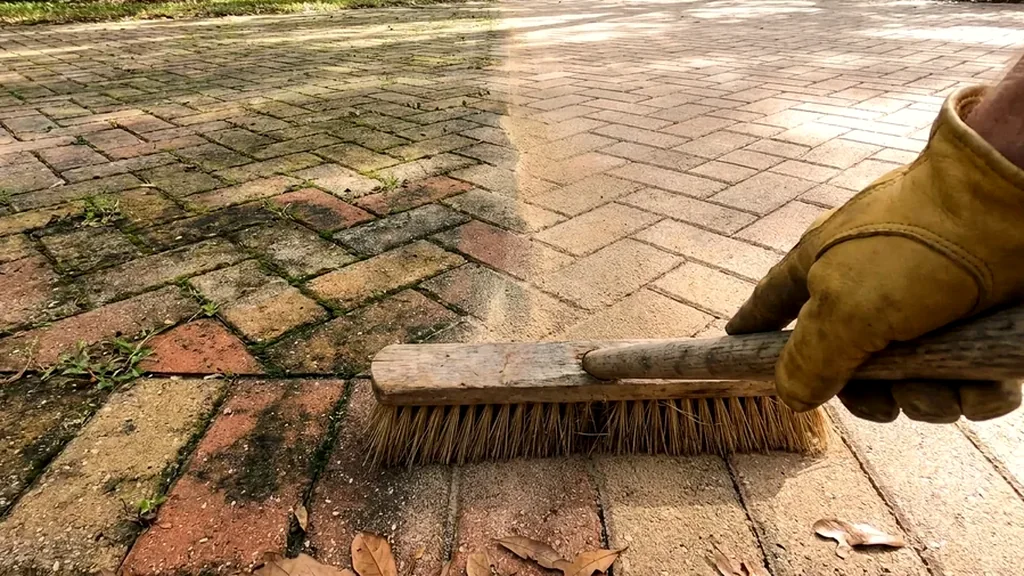
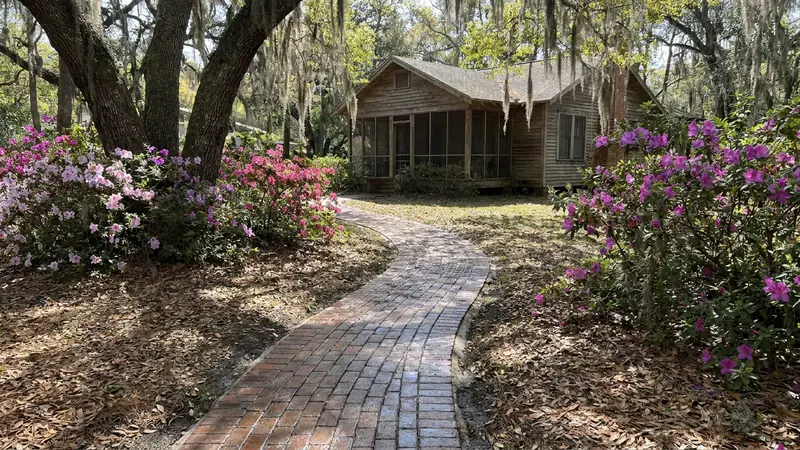
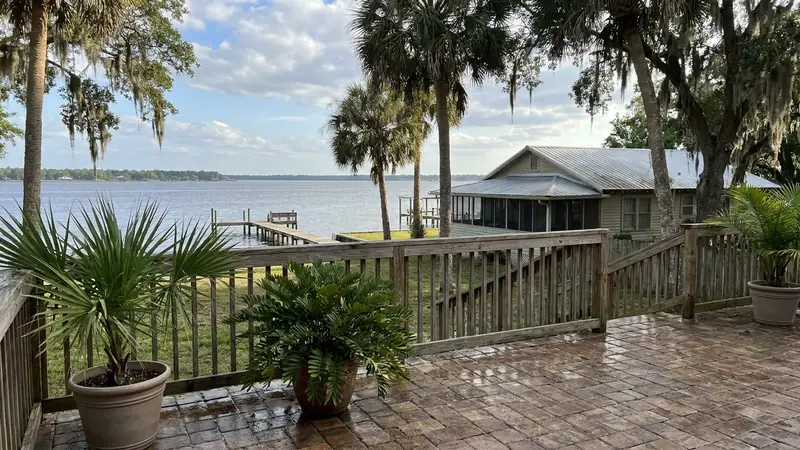
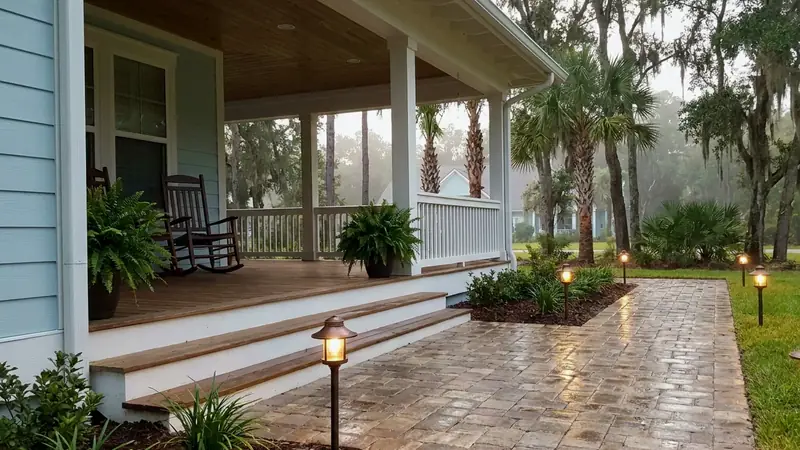
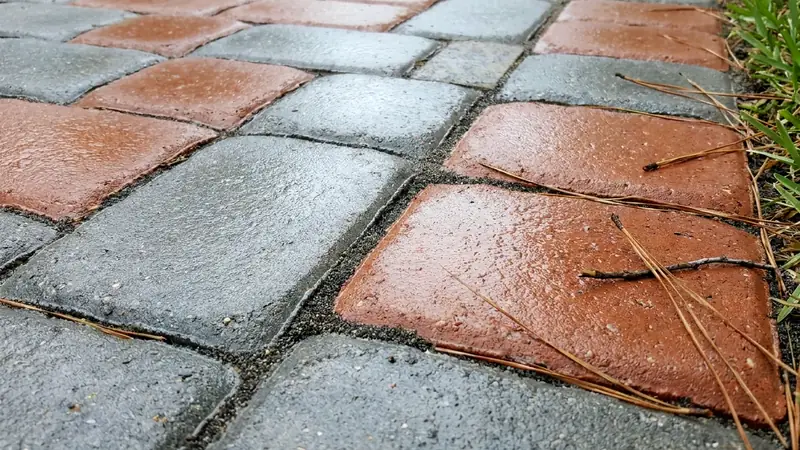
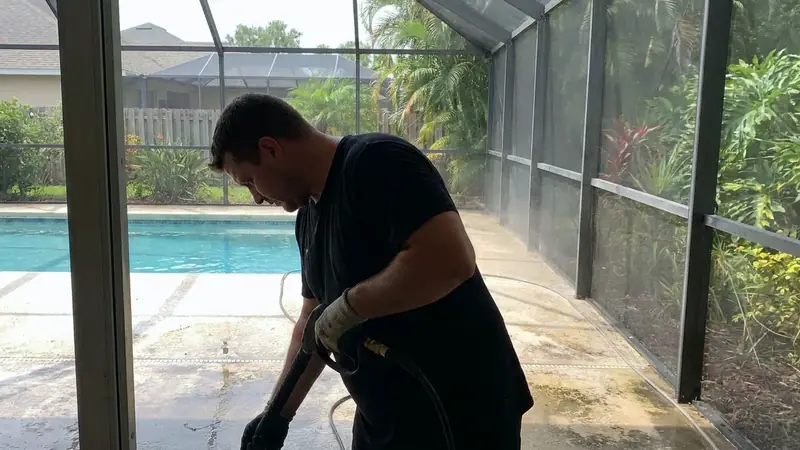
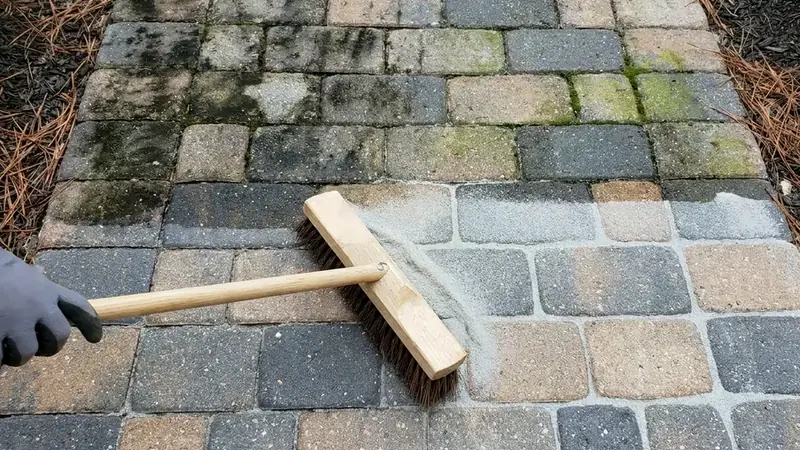
How do Palatka pavers look after a fresh seal?
How does the paver sealing process work from start to finish?
Each job runs in five steps, beginning with an inspection and ending with a walk-through. If you are ready to schedule, call (386) 854-4508.
1. Measure and inspect
Before pricing the sealing job, the contractor measures the area and writes down sunken spots, cracked pavers, old sealer and places where water stands.
2. Cover and wash
Plants and doors get covered and the sprinklers go off. A surface cleaner washes the pavers at low pressure so the joint sand stays in place.
3. Treat the stains
Rust, algae, tannin and white salt film each get a cleaner made for that stain, tried on a small spot first.
4. Refill the joints
Once the pavers are dry, sand is swept in and settled, and the extra is swept away.
5. Seal and walk it with you
When sealer is part of the job, it goes on with a sprayer, and a dry roller picks up puddles. A walk through the finished area follows, along with advice on how long feet and cars should stay off.
Frequently Asked Questions
Why is paver sealing so expensive?
Most of what you pay covers labor and prep, with the sealer itself a smaller share. A full job means washing, treating stains, refilling the joints, waiting for everything to dry and then applying the coat. A Northeast Florida washing company also says stripping a failed coat from an earlier job costs more.
How long do paver sealers last?
Usually two to five years. The Northeast Florida washing company calls two to three years typical, and Unilock says many owners reseal every three to five. Open sun, pool chlorine and heavy car traffic move a coat toward the short end.
Is it better to spray or roll paver sealer?
Either works, and many contractors use both. Unilock lists a low pressure sprayer, a foam roller or a short pile roller, and suggests a dry roller afterward to pick up puddles and avoid streaks. How evenly the coat goes on matters more than the tool.
How much is sealant for pavers?
Most of a quote is labor, so the sealer itself is a small part of it. Unilock says a gallon covers about 80 to 120 square feet of solvent-based sealer or 100 to 150 of water-based, which is why bigger areas need more product. For a total, use the published $1.75 to $3.25 per square foot to clean, sand and seal.
Do you seal pavers before or after polymeric sand?
Sand goes in first and sealer goes on after. The Northeast Florida washing company lists the order as clean, re-sand, then seal. Unilock adds that water-based sealers help harden the joint sand once the coat dries.
How much does it cost to seal a pool deck in Palatka?
A pool deck falls in the same published range of $1.75 to $3.25 per square foot to clean, sand and seal. A 600 square foot deck would come to about $1,050 to $1,950. Ask about footing, because Unilock says a high gloss finish can be slippery when wet.
Can I seal my pavers right after a Palatka rainstorm?
Not right away. Unilock asks for 24 to 48 hours of clear skies before sealing, and pavers in cool shade can take about a day to dry. With about 107 days of rain a year, expect a contractor to check the forecast and move the date if needed.
Will sealing stop the orange stains from my sprinklers?
No, the stains have to be treated first. UF/IFAS says most Florida well water is high in iron and leaves rust deposits on whatever it touches. The Northeast Florida washing company says rust needs a rust treatment and not more pressure, and a coat applied afterward does not erase marks that are already there.
Want a coat that keeps your pavers looking good?
Send the short form or call, and a local contractor will answer within 1 business day, usually much sooner.
Free, no obligation