
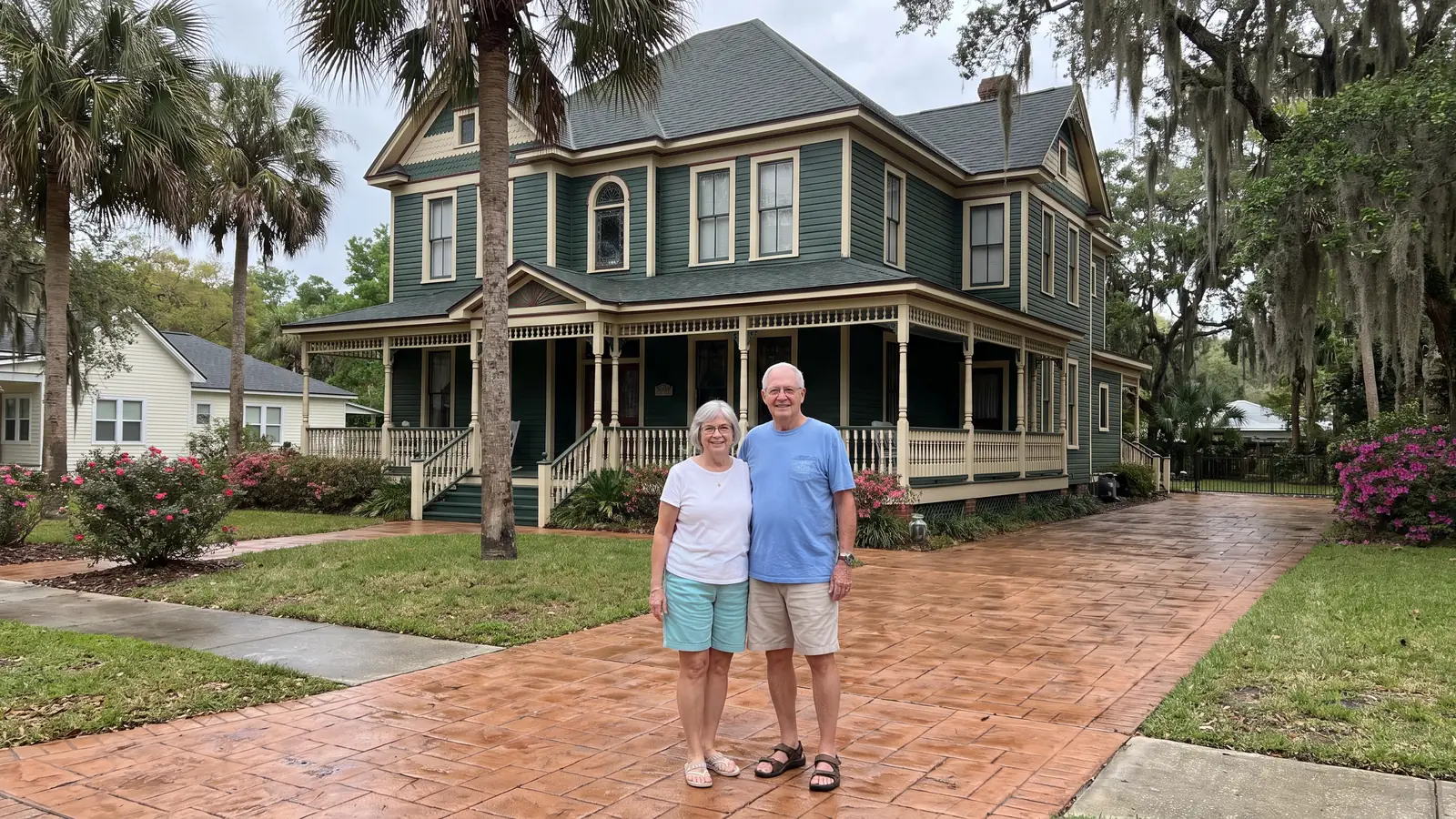
Paver sealing for St. Augustine homes
Paver Sealing in St. Augustine, FL
St. Augustine's dry season runs November through April, so call (386) 854-4508 to book a free paver sealing estimate.
- Brings out deeper paver color
- Fresh joint sand helps lock pavers in place
- Gives weeds less room to grow
- Makes the surface easier to keep clean
- Free estimate, no obligation
Request a Free Estimate
Free, no obligation.
Fast, careful paver sealing in St. Augustine
Paver sealing is available across St. Augustine, from the narrow streets of Lincolnville to Nelmar Terrace and the grid of Fullerwood Park. Driveways, courtyards and walkways are all covered, and a local contractor cleans, re-sands and seals them. Call (386) 854-4508 for a free estimate, and a reply arrives within 1 business day, usually much sooner.
Think of a courtyard that turned green after a wet August, or a driveway with weeds along every joint. Sand, a wash and a fresh coat bring back one even color. If you would like to talk about timing first, you can send a quick request.
Why hire a local paver sealing contractor in St. Augustine?
St. Augustine has two clear seasons, a wet summer from May through October and a dry stretch from November through April. A local contractor books around them, so call (386) 854-4508 to pick a window for your pavers.
No-pressure estimate
A local contractor looks at your pavers and gives you a number. Nothing is owed unless you say yes.
A published range
A clean, sand and seal job is commonly published at $1.75 to $3.25 per square foot in Northeast Florida. Use that to size up a St. Augustine quote.
Timing that fits the weather
The contractor can aim for the dry months, when long rainless stretches give sealer room to dry and set.
Brick gets its own sealer
Old brick takes a breathable penetrating sealer, while concrete pavers can take a film. Ask which one your pavers need.
Get Your Free Estimate in St. Augustine
Tell us about your pavers in St. Augustine.
Free, no obligation
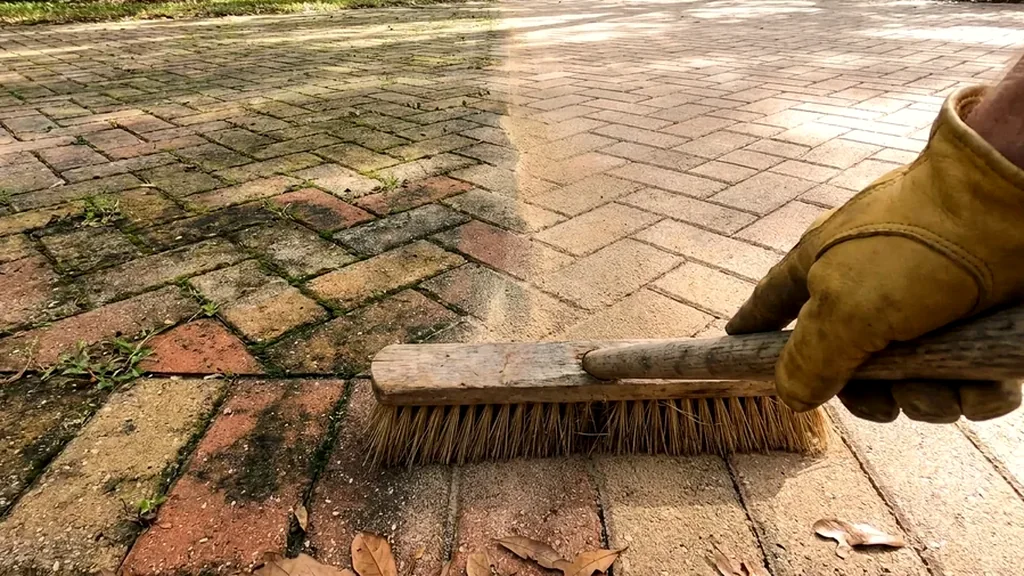
What paver problems show up most in St. Augustine?
Summer cloudbursts that empty the joints
Daily thundershowers are typical in a St. Augustine summer, and August and September each average about 7.2 inches of rain. A St. Augustine paver company says most local installs used play sand, which storms and sprinklers wash out. The joints need fresh sand before any coat, or the sealer locks in gaps. A driveway that looks solid can still have joints that sit lower than the stones around them.
Rain and a king tide on the same low street
The city says it floods when regular rain lands on a high tide, and that about 90 percent of residents live in a floodplain. A Flagler College report says normal rainfall and king tides can cause flooding that once took large storms. Pavers that sat in that water hold a film of dirt, so washing comes first. Ask the contractor to look at low corners and gutters that drain onto the pavers. Standing water after a storm is worth mentioning when you call.
Dry months and water use
From November through April the city often has long rainless stretches. A pressure wash uses a lot of water, so ask the contractor how much the job needs and how rinse water is handled. Ask whether a method that uses less water fits your pavers. A contractor can adjust the plan to the week you want the job. St. Augustine averages about 50.6 inches of rain a year over roughly 118 rainy days, with August and September the wettest months, and daily thundershowers are typical in summer. When water soaks in and darkens the stone quickly, one St. Augustine company reads that as a sign the old coat is gone.
Old brick and coquina beside the pavers
The Castillo, the old city gates and many colonial walls were built of coquina, which Wikipedia says is slowly deteriorating where it is exposed. Safe Touch says coquina and historic stucco need soft washing, not pressure. A Jacksonville cost guide adds that brick and natural stone are more porous than concrete, so they take a different sealer. That is why a mixed yard of brick, stone and concrete may get more than one product. The estimate should name each product and the area it covers.
Shade and damp on small lots
Lincolnville has narrow streets, small lots and houses built close to the street line. Moss and algae should stay off pavers unless the spot is heavily shaded. A green walk beside a wall therefore points to damp that never dries. Cleaning has limited value if the damp comes back, so the contractor looks at drainage and sun first. A small change, such as trimming a hedge, can help a damp corner dry out. Ask whether gutters or downspouts empty onto the walk, since that keeps it wet.
Does paver sealing reach St. Augustine's historic districts and the streets around them?
Yes, paver sealing is available across the city, including its older districts. Fullerwood Park has gridded streets east of San Marco Avenue, and Nelmar Terrace was platted in 1886. Abbott Tract has 17 blocks between Matanzas Bay and Pine, San Marco and Shenandoah avenues. If your street is not named here, send a quick request and give your address.
The Model Land Company district has 238 historic buildings, and Lincolnville was founded by freedmen in 1866. Lincolnville's small lots mean access, shade and drainage differ from one house to the next. Tell the contractor your district when you call (386) 854-4508, and say whether the pavers are in a front walk, a side yard or a courtyard.
The city has five Historic Preservation zoning districts, and most work inside them needs a Certificate of Appropriateness. The city's page lists site work but does not mention paving or driveways, so ask the city about your address before you decide. Owners can find their district on the city's interactive map. The Historic Architectural Review Board meets on the third Thursday of each month, and you can send a quick request when you know the finish you want.
What does paver sealing cost in St. Augustine?
A clean, sand and seal job is published at $1.75 to $3.25 per square foot in this region, and a strip-and-reseal job runs higher. Prep moves the price more than the sealer does, according to a company in town. To get a figure for the pavers at your address, send a quick request.
Brick and natural stone usually cost more than plain concrete, since they need a different sealer. Small jobs run higher per square foot, and a tight courtyard slows the work. Parking on a narrow old street matters too, because the contractor needs room for gear. Call (386) 854-4508 to learn which of these fit your property, and what the contractor would measure first.
| Paved area | Typical example | Clean, sand and seal |
|---|---|---|
| 300 sq ft | Small patio or walkway | $525 to $975 |
| 600 sq ft | Two car driveway | $1,050 to $1,950 |
| 1,000 sq ft | Large driveway or pool deck | $1,750 to $3,250 |
| 1,500 sq ft | Driveway plus pool deck | $2,625 to $4,875 |
Math based on the $1.75 to $3.25 per square foot that Northeast Florida paver companies publish. Your contractor sets the actual price after seeing the surface. Repairs, leveling and stripping failed sealer are usually extra.
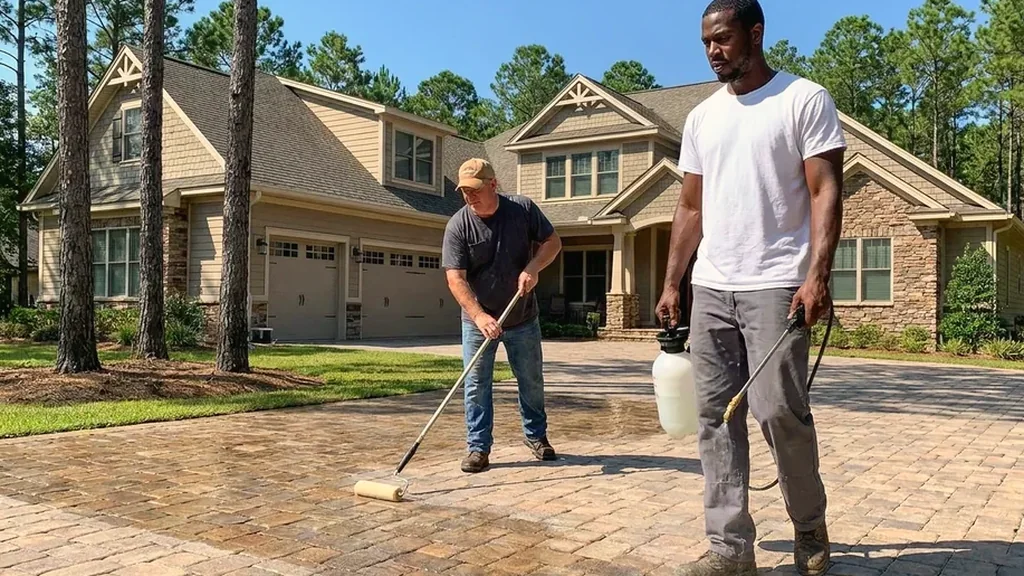
How does a paver sealing job work in St. Augustine?
Look over the pavers and the old coat
The contractor checks each surface, how water drains and what sealer is already down. Sinking, heaving or rocking pavers need an installer to reset them first, because sealing locks in whatever is there. Pavers that rock underfoot cannot be fixed by a coat. Because water-based sealer cannot go over solvent-based sealer, the old product matters.
Clean with the right pressure
Cleaning takes off algae, dirt and old film, and care is needed near coquina, stucco and old brick. A trade supplier warns that pressure above 3,000 PSI on standard concrete pavers risks stripping the surface. The contractor also plans how much water the washing needs.
Refill the joints
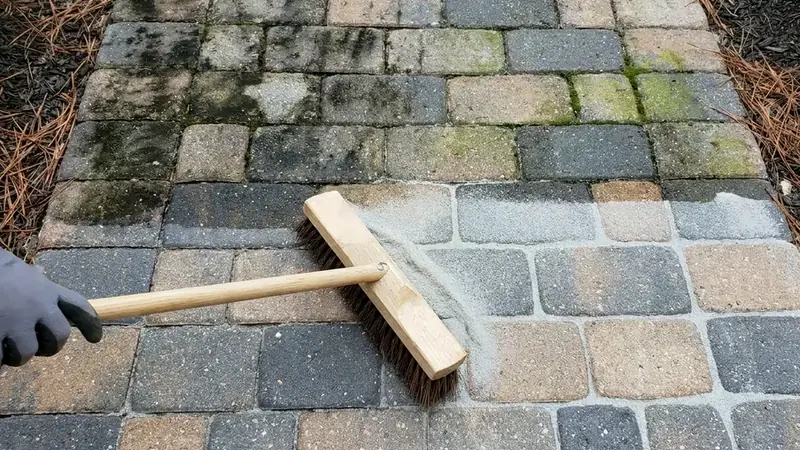
Since washing pulls sand from the joints, new sand goes in before any coat. Paver joint sand packs tight, where play sand washes out in the next afternoon storm. Full joints keep the pavers from shifting and keep weeds from getting a start. Landscape Ontario notes that lost joint sand lets soil in, which is what weeds feed on.
Let it dry completely
Sealer needs a dry surface, and a film rolled on in muggy conditions can trap moisture and turn white overnight. In summer the contractor watches for a clear window between storms, and may start early to finish before the afternoon clouds build. In the dry months, a few sunny days is often enough, though shaded courtyards behind old walls can need longer.
Seal and set the traffic times
The sealer is sprayed on and then rolled out. Walking is usually fine within hours and cars should stay off for about a day. Water that beads afterward shows the sealer is working, and water that soaks in and darkens the paver shows the coat is gone.
Complete paver services in St. Augustine
A St. Augustine job runs in this order: look over the surface, clean it, refill the joints, let the pavers dry, then seal. One St. Augustine company says brand-new pavers should wait 60 to 90 days so moisture and white mineral haze can come out first. The contractor will tell you if yours are ready, so send a quick request and mention when they were laid. A photo of any white haze helps the contractor judge the stage.
Courtyards, driveways, front walks and pool decks each get their own treatment. A courtyard between old walls may stay damp, while a driveway takes sun and tires. Clay brick gets a breathable penetrating sealer, and concrete pavers can take a film-forming acrylic. Call (386) 854-4508 and list the surfaces, since a single yard can need two different products.
Finish choices run from wet look gloss and satin to natural matte, plus a penetrating natural stone finish. Professionally applied sealer typically lasts two to five years in Northeast Florida, and changing finishes later means stripping the old coat. Think about how much sun the surface gets, since a sunny courtyard shows wear sooner than a shaded one. send a quick request if you want a contractor's view first.
The dry months, November through April, are the natural window for sealing, and the wettest are August and September. The Nights of Lights runs each winter from late November into January, with weekends and Christmas week the busiest. Early December weekdays are quieter, so call (386) 854-4508 to ask about a date that avoids the crowds.
Questions to ask before you hire
- My yard has a lot of live oaks, so how do you deal with the tannin stains from fallen leaves?
- My home runs on well water, so can the rust spots from my sprinklers be removed before sealing?
- The pavers back onto a retention pond, so how do you keep rinse water out of it?
- Can you tell me how many square feet you measured, and how the number was reached?
- If a storm pops up in the afternoon, how do you protect a sealer coat that is still wet?
- How do you handle pavers that sunk or heaved because of tree roots?
- Will the finish be glossy or matte, and can I see a sample on a spare paver first?
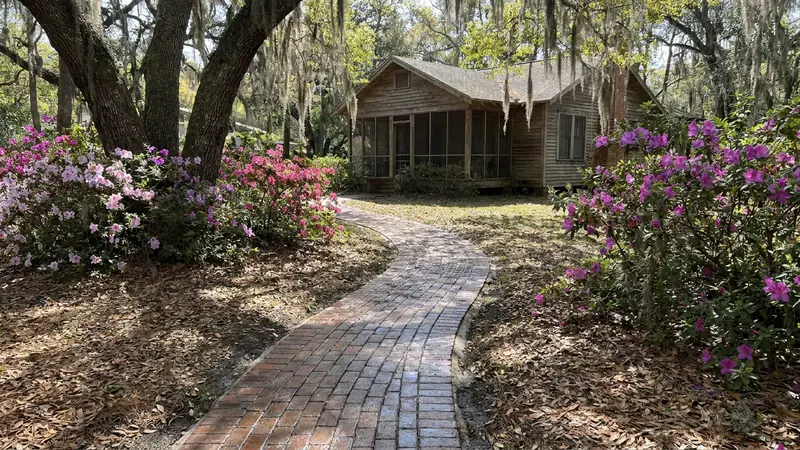
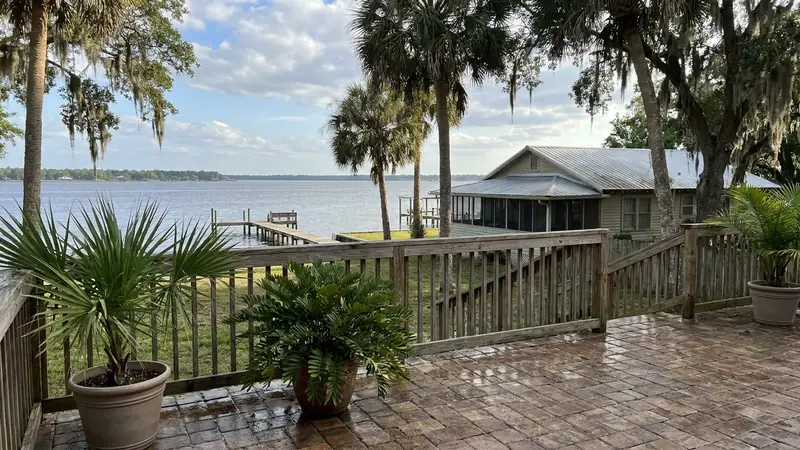
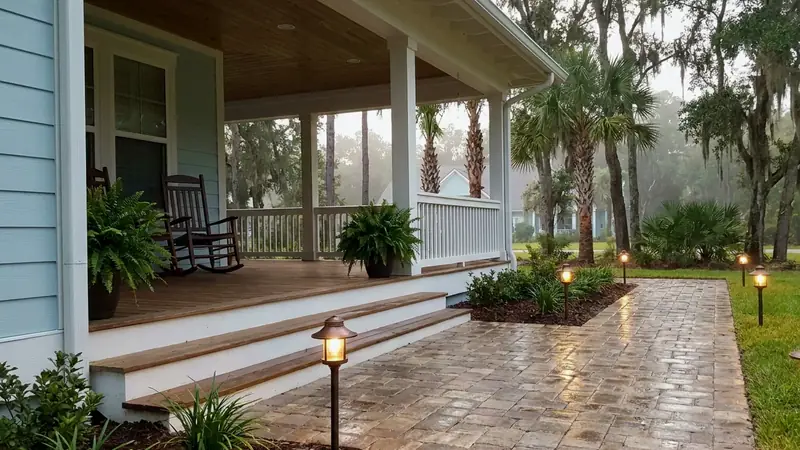
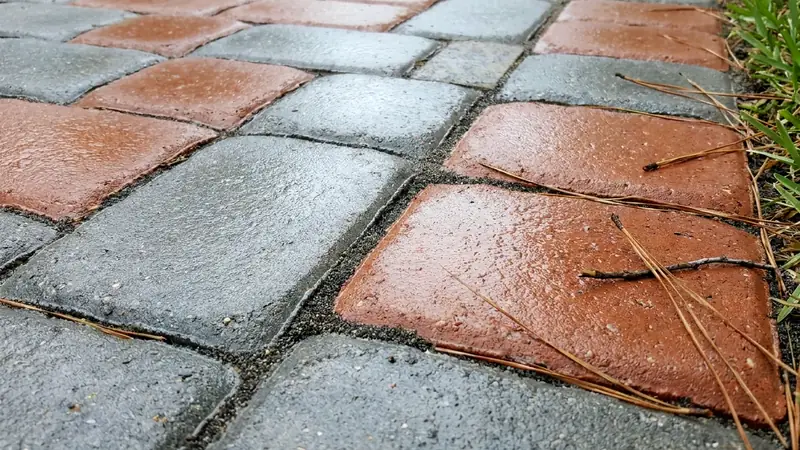
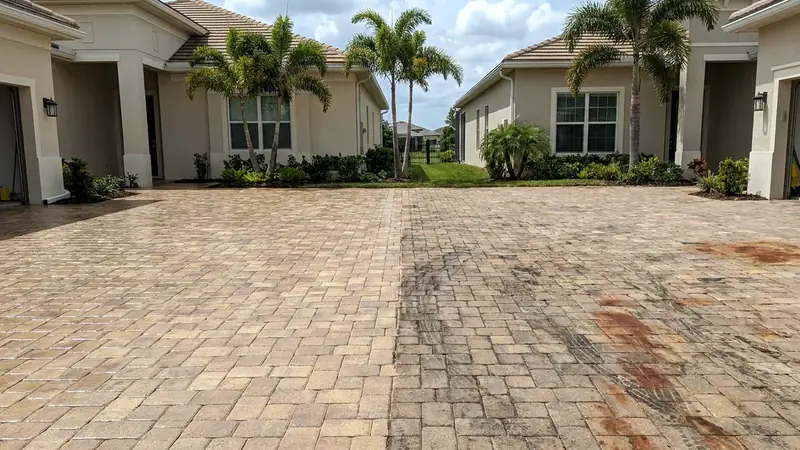
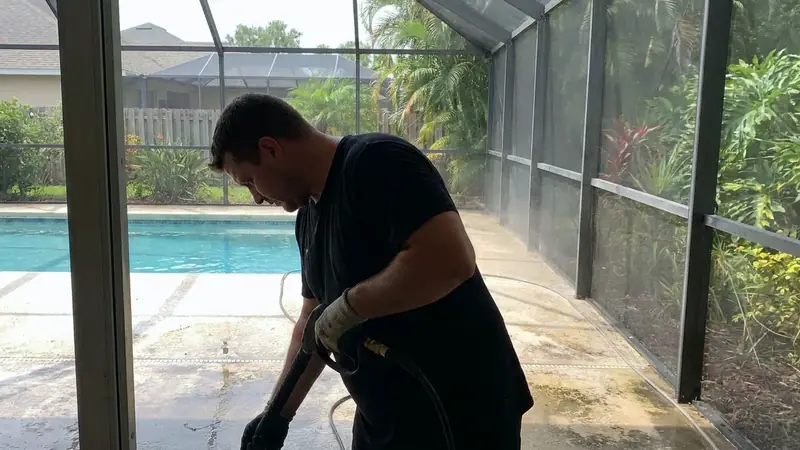
What do sealed pavers look like around St. Augustine?
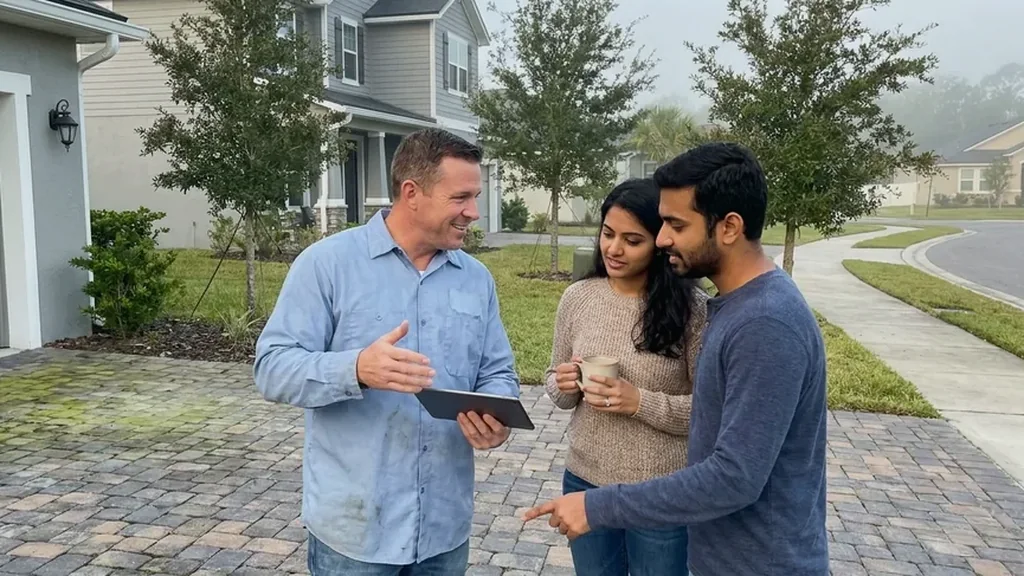
Why local matters in St. Augustine
A contractor who works in St. Augustine knows that two houses a block apart can need different plans. One may sit on high ground with sun, and the next on a low lot that floods with a king tide. That local sense shapes the cleaning and the timing. Call (386) 854-4508 and name your street.
Local work also means knowing the rules of old neighborhoods. Inside a historic district, most exterior work needs a Certificate of Appropriateness, and replacing features with matching materials may be approved by staff. A contractor who has seen that process can tell you what to ask the city. To start, send a quick request and give your address.
Streets matter as well, since many older blocks are narrow and parking is tight. A local contractor plans where the truck and gear will sit, so the job does not block a neighbor. If your street is tight, mention it when you send a quick request, along with any permit parking rules for your block.
Why does St. Augustine's age matter when sealing pavers?
Spanish settlers founded the city on September 8, 1565, and the Castillo de San Marcos was built from 1672 to 1695 with coquina. Brick came to the streets after shell, earth and cypress, and a St. Augustine Blend paver was made to match historic brick tones. That heritage is why pavers here often sit beside old materials. You can send a quick request to ask how a contractor handles them on a street this old.
Henry Flagler finished the Ponce de Leon Hotel in 1887, and the Bridge of Lions opened in 1927 across Matanzas Bay. Landmarks include St. George Street, Flagler College and the Lightner Museum. The city had 14,329 people at the 2020 Census, and 18.5 percent of its 8,096 housing units were vacant. To see your pavers in person, call (386) 854-4508 for a free visit.
Frequently Asked Questions
In St. Augustine, is sealing pavers good for Florida weather?
Yes, because sun, humidity and heavy summer rain wear unsealed pavers fast. Sealing is not required, but it protects against stains, fading and erosion, and it locks the joint sand in place. In St. Augustine, where storms wash sand out, that last point matters most.
In St. Augustine, how long do paver sealers last?
Companies commonly quote two to five years. A St. Augustine company says salt air near the Matanzas River and bay can shorten that to 2 to 3 years, against about four elsewhere. Another says to reseal every 3 to 5 years depending on traffic and weather, so look at yours each year.
How much is sealant for pavers in St. Augustine?
The published range is $1.75 to $3.25 per square foot to clean, sand and seal, and stripping an old coat costs extra. The sealer itself is a small part of that price. Prep, cleaning and fresh sand make up most of it, and a free estimate gives your number. Setup is spread over more surface on a big job, so the per-foot price drops.
Is dish soap enough to clean pavers before sealing in St. Augustine?
Usually not. Sealer locks in whatever is on the surface, so algae, stains and old film must be gone first. A contractor's wash step handles that and checks the joints. If soap alone leaves green or dark patches, the coat would trap them, so the cleaning has to finish before any sealing. Ask the contractor what cleaner is planned and how the joints are refilled afterward.
Can brick pavers in St. Augustine be pressure washed before sealing?
Yes, with care: a trade supplier warns that over 3,000 PSI can strip concrete pavers, and strong spray pulls out joint sand. Old brick is more porous than concrete, so the contractor keeps pressure down, refills the joints and picks a breathable sealer. Tell the contractor if your brick is old, since age changes how much sealer it drinks.
Does paver cleaning in St. Augustine use a lot of water?
It can. Pressure washing runs through a lot of water. Ask the contractor how much the job will use and how rinse water is kept off beds and the street. Ask whether a lower-water method fits your pavers. A good contractor will explain the plan before the visit.
In a St. Augustine historic district, do I need city approval to seal pavers?
Possibly. Most work in the city's five Historic Preservation districts needs a Certificate of Appropriateness. Its page lists site work, but does not mention paving or driveways, so ask the city about your address. Matching materials may be approved by staff without a full board review.
When is a good time to seal pavers in St. Augustine?
The dry season, November through April, often brings long rainless stretches. A Jacksonville cost guide says fall sealing after hurricane season protects pavers through the dry winter, and spring locks in the surface before summer humidity. Any dry week can work, since sealer needs a dry surface. The Nights of Lights season brings crowds from late November into January, so book early if you want a date before the crowds.
Ready for a Free Estimate in St. Augustine?
Call (386) 854-4508 and tell us about your pavers.
Free, no obligation